Stormwater
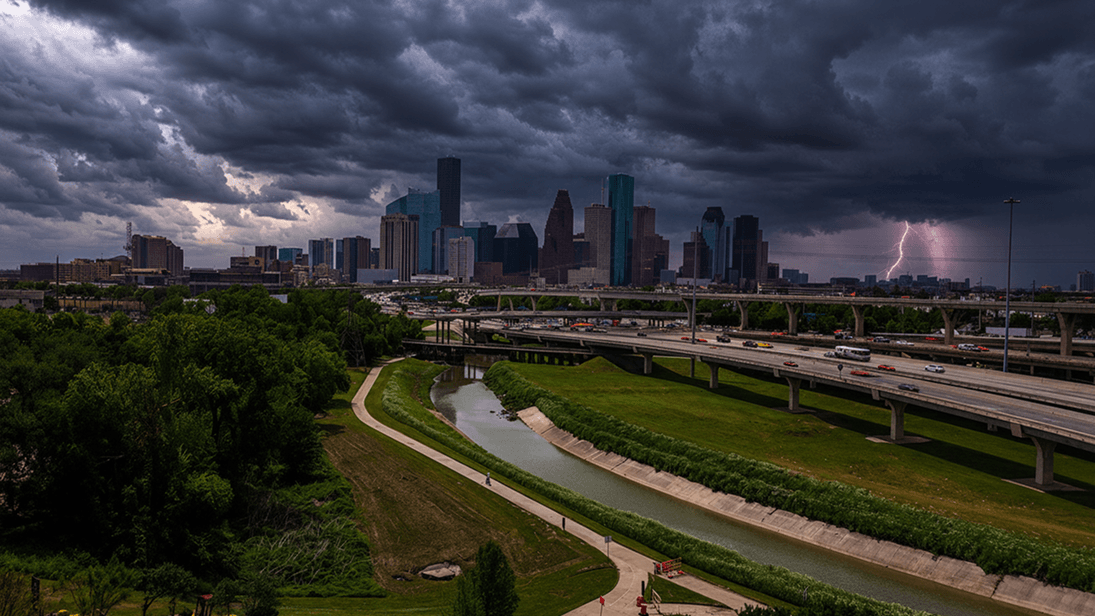
Storms are one of nature’s most powerful reminders that we are not in charge. They humble us, terrify us, and fascinate us all at once. If you ask people which apps they faithfully use, I’d bet my hat one of them is the weather report. When a big storm is coming, the whole world tunes in. I believe that deep down, this fascination comes from the simple truth that storms are completely beyond our control, and it is that truth puts us civil engineers in quite a precarious position. Our job is to try to manage the unmanageable.
According to reliable data from Our World in Data, natural disasters still claim between forty and fifty thousand lives around the world each year. In the United States alone, flooding causes between one hundred seventy-nine and five hundred billion dollars in damage on average. Our work as civil engineers is making a difference. Deaths and damages are lower than they could be, but we still have a long way to go.
So how do we reduce the impact of these uncontrollable events? First, we study them deeply. Back in 1968, FEMA made a smart move by requiring detailed flood inundation maps across the country. Then came better computers that let us build sophisticated two-dimensional models. These tools help us understand the probability of different water levels in our watersheds. That knowledge lets us write smarter regulations that keep homes and businesses out of the worst flood paths.
Over the thirty-year life of a typical mortgage, a house built exactly at the 0.01% annual chance flood elevation — commonly called the 100-year floodplain — still has about a twenty-six percent chance of flooding. Most people hear “100-year flood” and think it won’t happen in their lifetime. But twenty-six percent? That’s something a family can understand when they’re signing mortgage papers.
Big glamourous projects matter, but real protection often comes from the smaller things we do every single day. We design storm sewers that carry rainwater safely to channels. We shape roadway slopes so water drains away from homes and businesses. We make sure bridge elevations don’t worsen river flooding. We advise families to build their houses above the dangerous flood levels. We create detention basins and mitigation systems that hold back stormwater instead of letting it rush forward all at once.
We have gotten better at communicating immediate danger. Simple flood gauges on low-water crossings, automated safety gates that warn drivers of rising water, and smart valves that adjust flows as a storm moves through are tools that save lives. They turn uncontrollable events into manageable risks.
As our rainfall data improves, as our modeling power grows with better computers, and as communication technology advances, I’m optimistic. We can build systems that warn people earlier and more clearly. One day, we may predict and prepare for events like Hurricane Harvey so effectively that we eliminate preventable loss of life. Nature will always send storms, but with knowledge, humility, and steady engineering work, we can protect our communities far better than ever before.
Dr. Culp is the most senior hydrologist at Tetra Land Services and has three decades of civil engineering experience. His Ph.D. scholarship studied the effectiveness of structural BMP for the control of storm water pollution in Harris County while performing water quality monitoring and modeling upon selected ponds for the county. Dr. Culp also co-authored the City of Houston stormwater quality management plan. He is one of Texas’s original Certified Floodplain Managers. Recently, Dr. Culp and his staff have developed a series of drainage studies for Industrial and Oil Majors along the Texas Gulf Coast. Culp is married with two children, and lives on his farm in Southwest Houston.